

Bank Owned Life Insurance (“BOLI”) is a life insurance policy that is purchased by a financial institution on the lives of its employees. A standard arrangement provides that the bank or bank holding company is the owner, payor and beneficiary of the life insurance policy. Regulations require that the policy be on an officer, highly compensated employee or board member of the bank. The bank owns the policy both during the time period that the insured is employed with the bank and after the employee separates from service either through termination, retirement, disability or death.
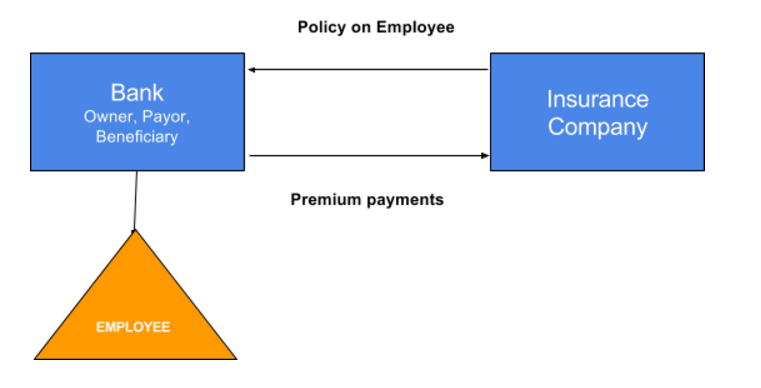
How BOLI Works
A bank, like most other employers, has an insurable interest on the employee’s life under state law.
BOLI premiums on the policy are generally structured in 2 ways:
- the bank makes a one time premium payment to the insurance company (“Single Pay”); or
- the bank makes a set number of annual payment (generally 7 payments) to the insurance company (“Multi Pay”).
Single Pay BOLI policies are treated as Modified Endowment (“MEC”) contracts and have various tax consequences associated with them. Multi Pay contracts are not considered MEC contracts.
As the owner of the life insurance policy, the Bank has sole control over the disposition of the cash surrender value and life insurance amount on the insured-employee. The bank receives the tax-deferred revenue from the growth of the policy’s cash surrender value each month, and will ultimately receive the death benefit benefit from the policy income-tax free (subject to certain AMT calculations). A bank that owns BOLI may also choose to share a portion of the death benefit with its insured-employee’s beneficiaries through a split dollar agreement or other non-qualified plans.
The Basics of a Bank Owned Life Insurance Policy
Each insurance policy is different - comparing one policy or company to another requires a side by side reading to note the similarities and differences. The initial amount of insurance that an employee will qualify for is generally based on several factors, including the insured’s age, sex, tobacco usage, general health. This is referred to as underwriting the participant. EBN works with several carriers that will provide “guaranteed issue” underwriting, meaning that the employee will not have to undergo any type of medical underwriting before the policy is issued. The proposed insured simply answers several questions and the policy is issued.
After underwriting, the policy is issued to the Bank. The policy consists of three parts:
- Cash Surrender Value (“CSV”) - the amount the Bank would recoup after surrender charges but before taxes if it were to liquidate all or a portion of its BOLI holdings. In reality, this represents the premium(s) paid plus earnings on the policy.
- Total Insurance or Death Benefit - the amount the Bank will receive when the employee passes away.
- Net Amount at Risk (“NAR”) - the difference between the Total Insurance and the Cash Surrender Value. The NAR represents the gain, in addition to the Cash Surrender Value, that the bank would receive tax-free in revenue when the insured dies.
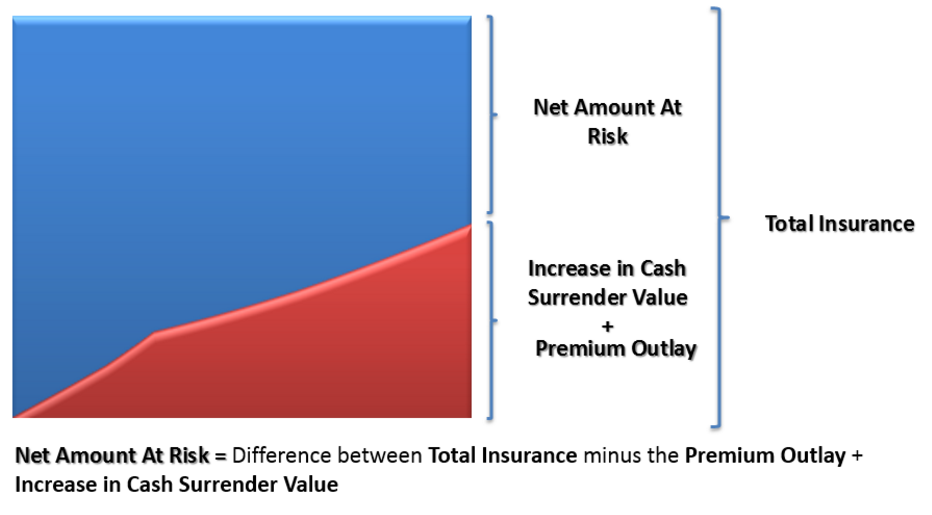
How BOLI Works "Under the Hood"
When the premium is paid to the insurance carrier, it is generally used for three separate purposes:
- Investment - a portion of the premium is invested either in the company’s general account, in a separate account that is directed by the bank or some combination of the two. The investment earnings build cash surrender value and are used to increase the amount of insurance on the participant.
- Mortality - this is the cost of insurance for the participant. In other words, how much the insurance company must put in reserve to pay for the potential cost of the death of the insured.
- Expense - the overhead of running the business of an insurance company.
Put together, these three components make up the overall returns of the policy.